

Architecture
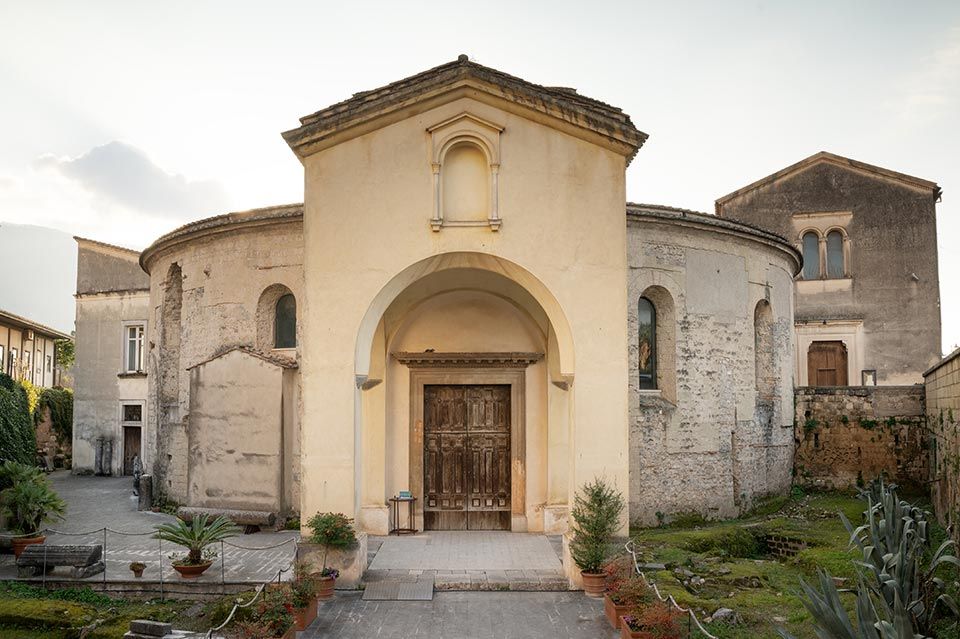
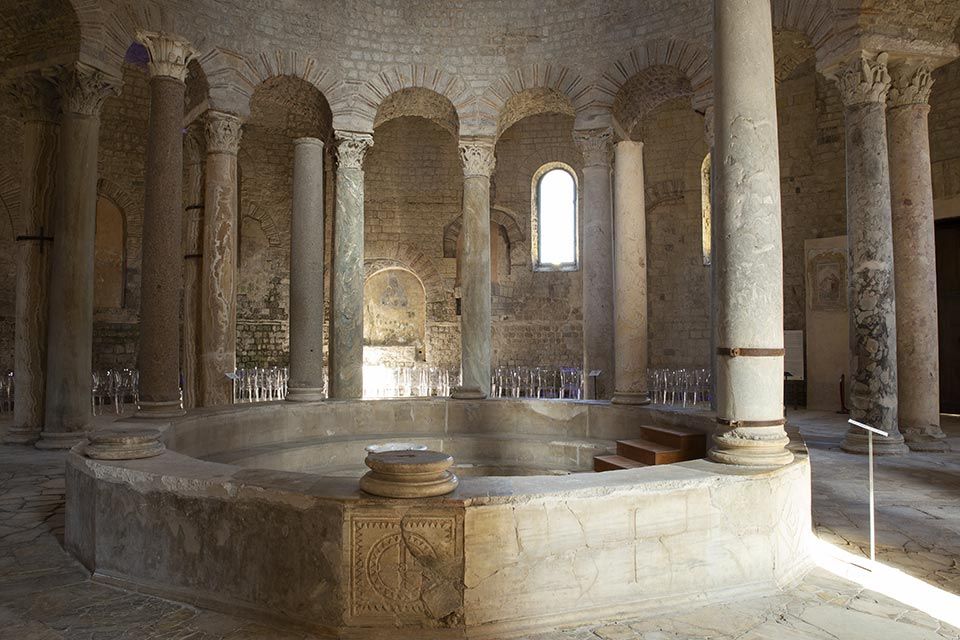
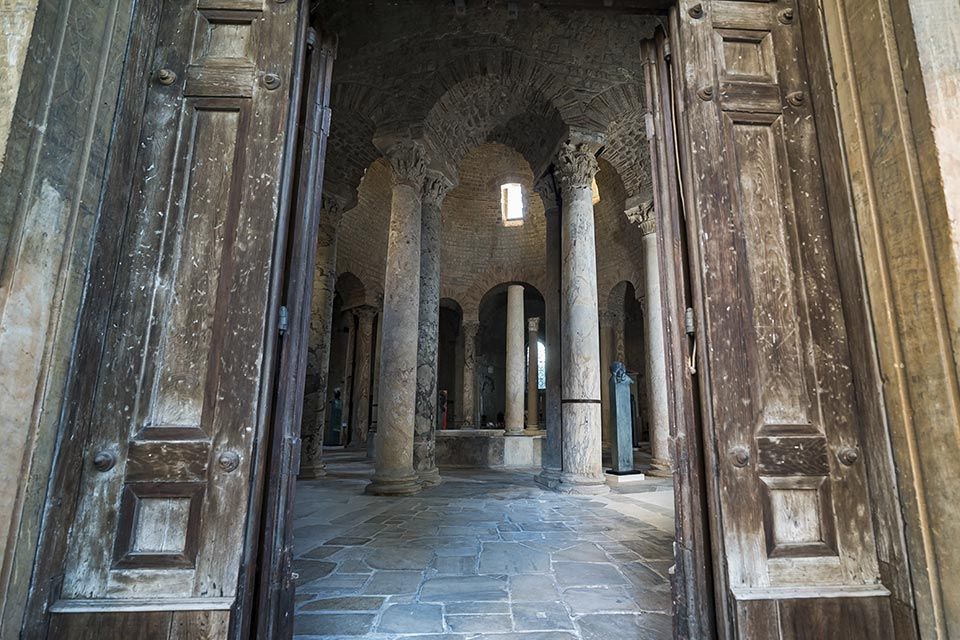
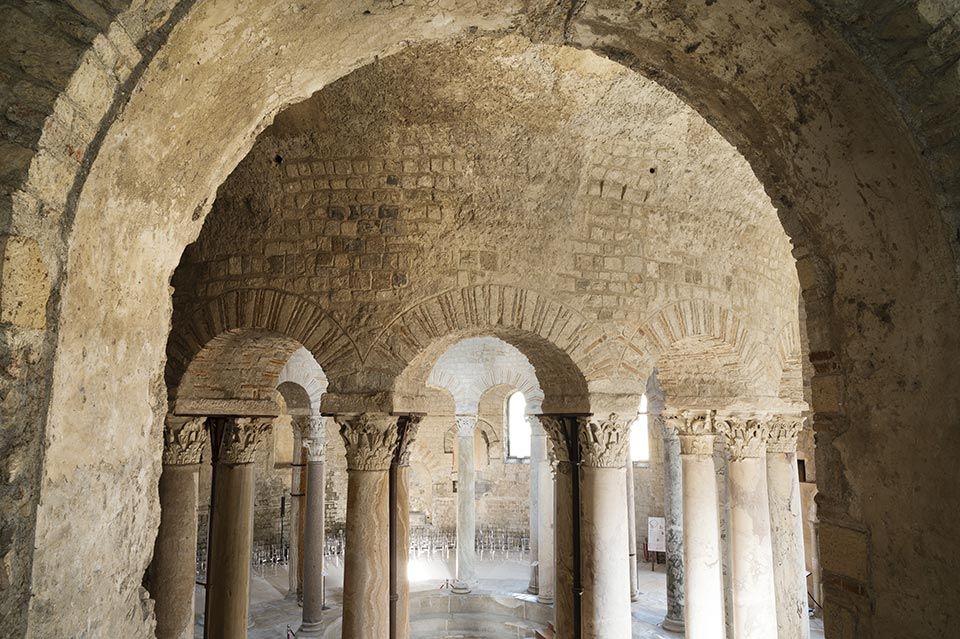
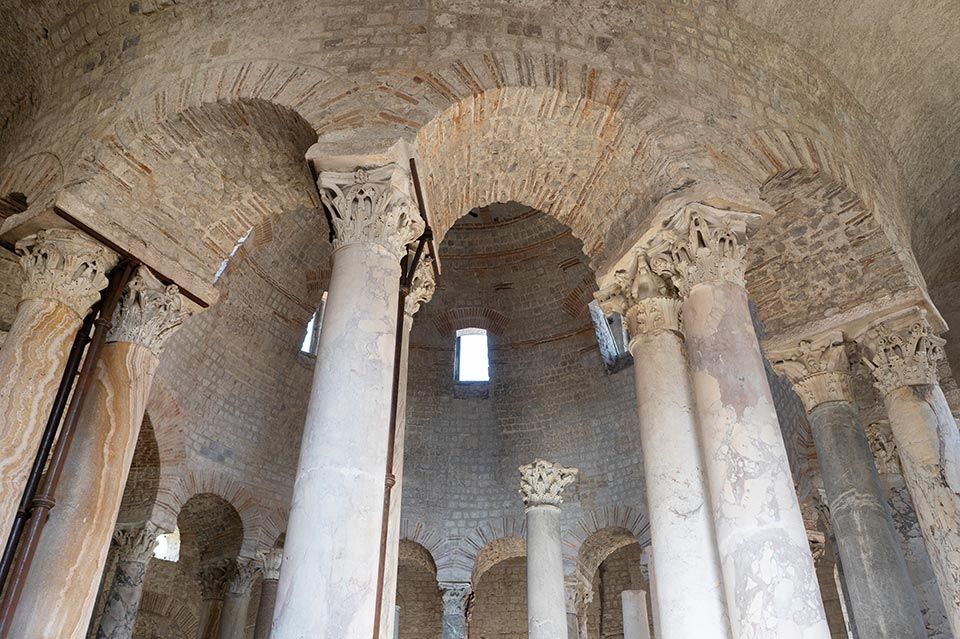
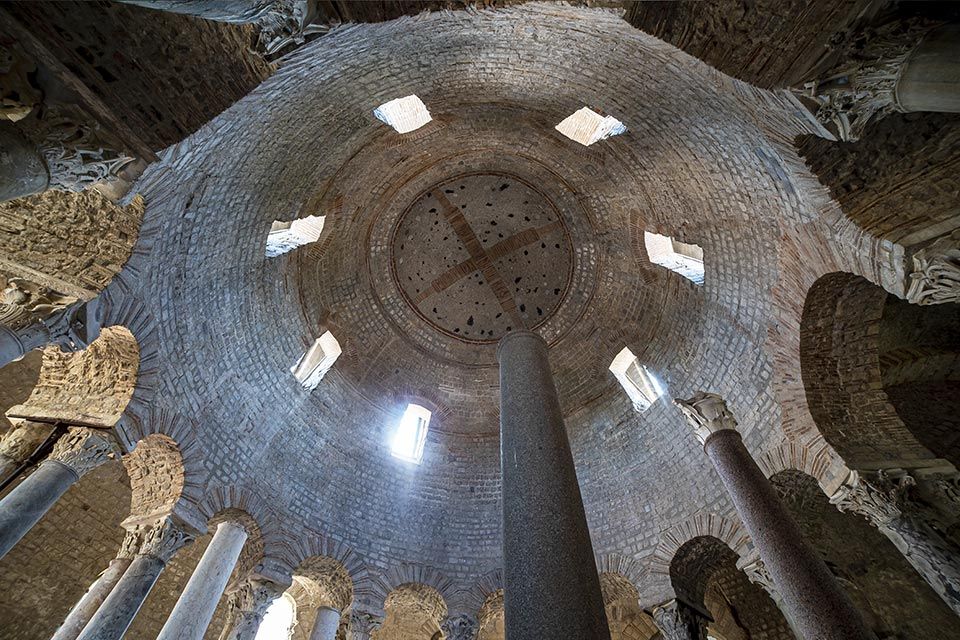
The building, featuring a circular plan, consists of two concentric spaces: a central area marked by 15 pairs of reused columns, and a ring-shaped ambulatory, covered by a barrel vault, which brings the overall diameter of the monument to 24 m.
The dome, rebuilt following the collapse caused by the Vesuvian eruption of 1944, is 15 m high and is protected externally by a cylindrical drum covered by a pyramid-shaped roof.
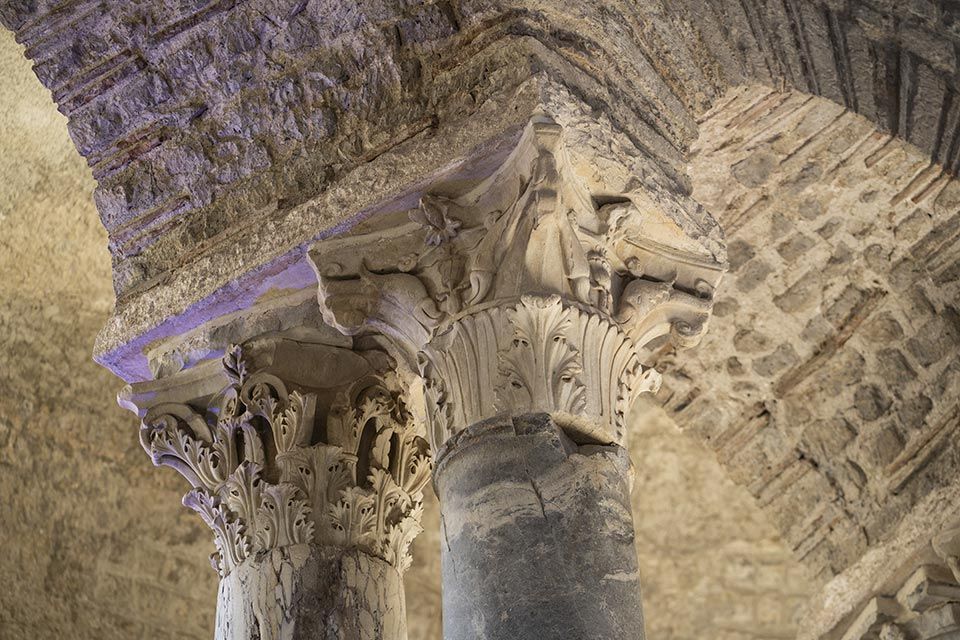
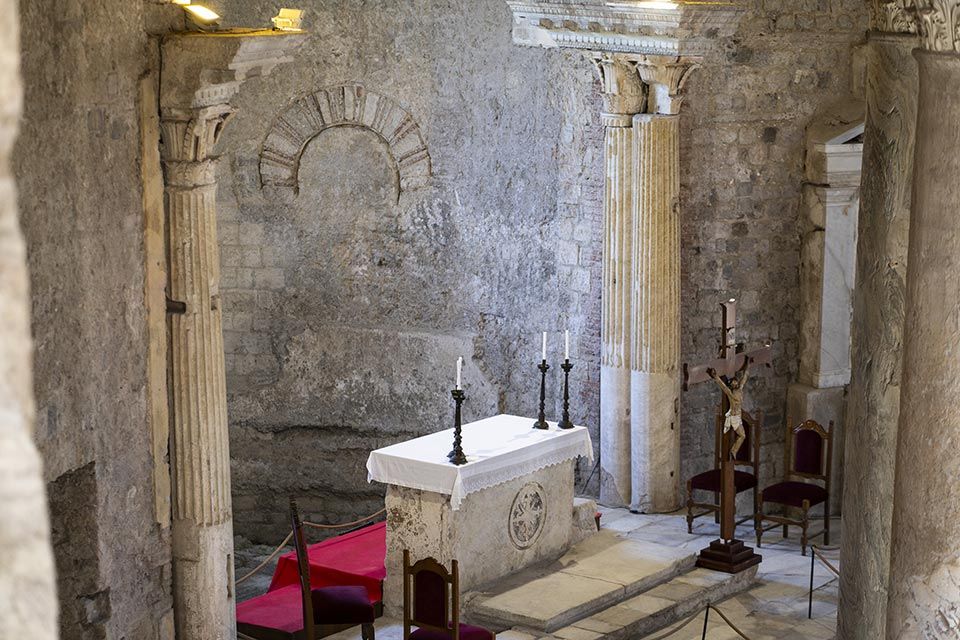
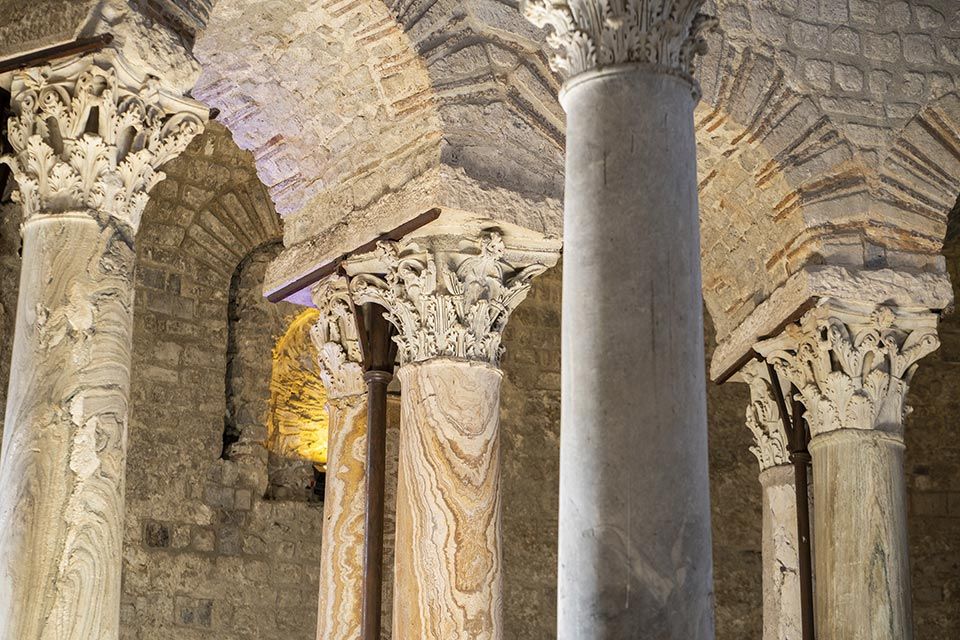
The 30 columns (each 5 meters high) and their Corinthian capitals supporting the dome were taken from the Roman city's public buildings, particularly the theatre, which can still be visited today. The columns are not randomly arranged, but are arranged according to a colour scheme, starting from the apse.
Of particular interest are some capitals depicting dolphins, which became internationally famous in 1783, when they were cited by Winkelmann in his work ‘History of the Arts and Drawing among the Ancients’.